DEDICATION
This book is dedicated to two extraordinary people who left us, too soon, within a span of four weeks in 2016. Andy Grove, the brilliant originator of the OKR, is remembered in fair detail in these pages. “Coach” Bill Campbell’s wisdom is invoked more fleetingly. Here, then, is our opportunity to celebrate Bill, a man who gave so much to so many. From his gift for honest, open communication to his zeal for data-driven operating excellence, the Coach embodied the very spirit of OKRs. So it’s only fitting that he graces our close.
On that clear April morning in Atherton, California, it took a big tent to hold Bill’s funeral mass on the Sacred Heart playing fields, the place he’d spent so many Saturdays coaching eighth-graders in flag football or softball. More than three thousand mourners turned out, from Larry Page and Jeff Bezos to generations of the (once) young people who’d played for him. Bill had embraced every one of us with his unabashed bear hugs and selfless guidance. And every one of us believed that Bill was our best friend. His life was the biggest tent of all.
The son of a gym teacher who worked nights at the steel mill in Homestead, Pennsylvania, Bill first earned his sobriquet in the 1970s as varsity football coach at his adored alma mater, Columbia University.* But Coach became the Coach when he traded the gridiron for an even more competitive arena, namely the boardrooms and executive suites of Silicon Valley. He was a world-class listener, a hall-of-fame mentor, and the wisest man I’ve ever met. His ambitious, caring, accountable, transparent, profane humanity built the culture at Google—and dozens of other companies—to what it is today.
As Ken Auletta wrote in The New Yorker, “In the world capital of engineering, where per-capita income can seem inversely related to social skills, Campbell was the man who taught founders to look up from their computer screens. . . . His obituary was not featured on the front of most newspapers, or at the top of most technology news sites, but it should have been.”
We first met in the late eighties. I was recruiting a CEO for one of my most famous failed ventures, the GO Corporation, a pen-based tablet computer company. (Bill’s joke was that we should have called it “GO, Going, Gone.”) He came recommended by Debra Radabaugh, the top executive recruiter in Silicon Valley, and by his old marketing boss at Apple, Floyd Kvamme, whom I’d recruited to Kleiner Perkins. The deal was sealed when I visited Bill’s team at Claris, the Apple software subsidiary. I’m usually quick to judge whether I’m ready to get into trouble with an entrepreneur, though it may take a while longer to persuade them to get into trouble with me. Claris had such great esprit de corps, and such obvious esteem for Bill, that I was sold on the spot.

Bill Campbell with his signature beverage for executive coaching sessions, 2010.
When Apple and John Sculley refused to spin off Claris in an IPO, as Bill believed had been promised, he took the job at GO. Though our business model flopped, we had a fabulous time together. Before Bill, GO’s executive team would preface every vote with a heated argument over strategy, making for winners, losers, and general hard feelings. After Bill became CEO, all of that changed. He’d sit with individual executives and ask them about their families, and tell a story or two in his colloquial way, and gradually he’d learn how they felt about the issue at hand. He had a remarkable way of getting people to agree in advance before they came into the room, and soon there was no more voting at GO. For Bill, it was always about the team, the company. He was devoid of private motives or agendas. The mission was paramount.
Bill was a master leader who developed great leaders. Five of his direct reports at GO became CEOs or CBOs of their own ventures. (I backed every one of them, and every one of them turned a profit.) Among many lessons, Bill taught us the importance of a team’s dignity, especially when a company fails. After GO sold out to AT&T, we made sure that those who were let go had great references and found good homes for their careers.
In 1994, I brought Bill back with me to Kleiner Perkins as an “executive in residence,” installed him in the corner office next to mine, and promised to find another company for him to run. Around the same time, Intuit founder Scott Cook decided to hire a CEO. Once I introduced Bill to Scott, it took them one walk around Bill’s neighborhood in Palo Alto for the Coach to get the job. He and Scott built a tremendous relationship and a spectacular company.
Early in Bill’s four-year Intuit tenure, he faced a crisis. Revenues were lagging to the point where they were going to miss the quarter. We had a blue-sky, visionary board of directors that was pushing to invest more capital and power through the shortfall. When the board met in a hotel suite in Las Vegas, the Coach wasn’t buying it. “Cut the crap,” he said. “We’re going to cut back and lay some people off. We’re going to get leaner because we’ve got to make the numbers. It’s part of the discipline and the culture I want.” Bill felt strongly about delivering results—for the shareholders, but also for the team and the customers.
As we polled the room, however, more and more directors came out for spending and plowing through. Bill looked more and more distraught. When it came around to me, I said, “You know, I think we should go with the Coach.” I wasn’t sure if he was right or wrong, but I thought it was rightfully his call. My position turned the tide. Later, Bill told me how much what I’d said had meant to him, and that he might have resigned had it gone the other way.
From that point on, we had an unbreakable bond. We could disagree and say some pretty harsh things, but the next day one or the other would call to apologize. Both of us understood that our loyalty—to the relationship, to the team—outweighed any differences.
Bill was still at Intuit when I recruited him for the board at Netscape. Soon he was my first call whenever I backed a new entrepreneur. It became our MO: Kleiner invests, Doerr sponsors, Doerr calls Campbell, Campbell coaches the team. We ran that game plan again and again.
In 1997, Steve Jobs returned to Apple in the most amazing nonhostile takeover of a public company ever, without putting up a penny. Steve asked for the resignations of all but one of Apple’s directors, and then he called Bill Campbell to join his new board. The Coach refused to be paid for this work; he was giving back to the Valley that had done so much for him. When a few companies prevailed upon him to accept stock, he funneled the proceeds into his philanthropic organization.
In 2001, after helping persuade Google’s founders to hire Eric Schmidt as CEO, I advised Eric that he needed Bill as his coach. Eric was a rightfully proud man who’d already served as CEO and chairman at Novell, and my suggestion offended him—“I know what I’m doing,” he said. So it wasn’t love at first sight for him and Bill. But in less than a year, Eric’s self-review showed how far he’d come around: “Bill Campbell has been very helpful in coaching all of us. In hindsight, his role was needed from the beginning. I should have encouraged this structure sooner, ideally the moment I started at Google.”
Bill considered his Google mandate open-ended. He coached Larry Page and Sergey Brin—and Susan Wojcicki and Sheryl Sandberg and Jonathan Rosenberg and Google’s whole executive team. He did it in his characteristic style, one part Zen and one part Bud Light. Bill gave little direction. He’d ask a very few questions, invariably the right ones. But mostly he listened. He knew that most times in business there were several right answers, and the leader’s job was to pick one. “Just make a decision,” he’d say. Or: “Are you moving forward? Are you breaking ties? Let’s keep rolling.”
When it came to Google’s OKRs, Bill paid closest attention to the less glamorous, “committed” objectives. (A favorite piece of coaching, served with his typical dash of salt: “You’ve got to make the f—ing trains run on time.”) As Google CEO Sundar Pichai recalls, “He cared about operating excellence day in, day out.” It went back to Bill’s deceptively modest-sounding motto: “Be better every day.” There is nothing more challenging—or more fulfilling—than that.
The Coach was the éminence grise at Google’s Monday executive staff meetings—our unofficial chairman of the board, if you want to know the truth. At the same time, he served as lead outside director on Apple’s board, which for anyone else might have presented a conflict. It drove Steve Jobs crazy, especially after Android emerged to challenge the iPhone. Steve harangued Bill forever to choose Apple and leave Google, but the Coach refused: “Steve, I’m not helping Google with their technology. I can’t even spell HTML. I’m just helping them be a better business every day.” When Steve persisted, the Coach said, “Don’t make me choose. You are not going to like the choice I’m going to make.” And Steve backed down because the Coach was his one true confidant. (He “kept Steve Jobs going,” as Eric Schmidt told Forbes. Bill was Steve’s “mentor, his friend. He was the protector, the inspiration. Steve trusted him more than he trusted anybody else.”)
Though the Coach knew more about technology than he let on, he’d never big-foot engineers or product developers. His superb insights were about leadership, about what made business teams and people tick—and how to protect your people from getting steamrolled by your process. If he saw someone treated unfairly, he’d pick up the phone and call the CEO and say, “This was a process error.” And he’d fix it.
People are discouraged from bringing love into business settings, but love was Bill’s most distinguishing trait. I can still picture everybody’s face lighting up when he’d walk into a meeting at Intuit. Sometimes it was love by faux insult. (If you came to work in an ugly sweater, he’d ask, “Did you roll some guy in the restroom to get that thing?”) But you always knew the Coach cared. You always knew he had your back. You always knew he was there for the team. You don’t find many leaders who can convey love and fearless feedback at the same time. Bill Campbell was a tough coach, but he was always a players’ coach.
More than most in our circles, he got family. He was absolutely the happiest when out coaching his daughter Maggie (and my daughter Mary) in softball. He’d be on the field at 3:20 sharp, no matter what big meeting was starting someplace else. And you’d never find the Coach distractedly checking his cell phone in the sixth inning. He was completely present. He sparkled in that setting.
Even after he got sick, Bill never stopped coaching. When I decided to take on the chairmanship of Kleiner Perkins, his advice was a big factor. With my two daughters off to college, the time was right. The Coach knew I wouldn’t be slowing down or moving “upstairs.” I’d take the job to accelerate what I loved doing: finding and funding the best entrepreneurs, and helping them build great teams as they scaled. It was my chance to become a player-coach for the next generation of leaders and partners. To follow Bill’s lead.
A few months before he died, in a podcast with my Kleiner partner Randy Komisar, the Coach explained that he “always wanted to be part of the solution. . . . People are the most important thing that we do. We have to try to make them better.”
Bill is gone, but for his many hundreds of disciples, all the executives he coached over all those years, his work goes on. We’re still trying to get better every day.
I miss you, Coach. We all do.
John Doerr
April 2018
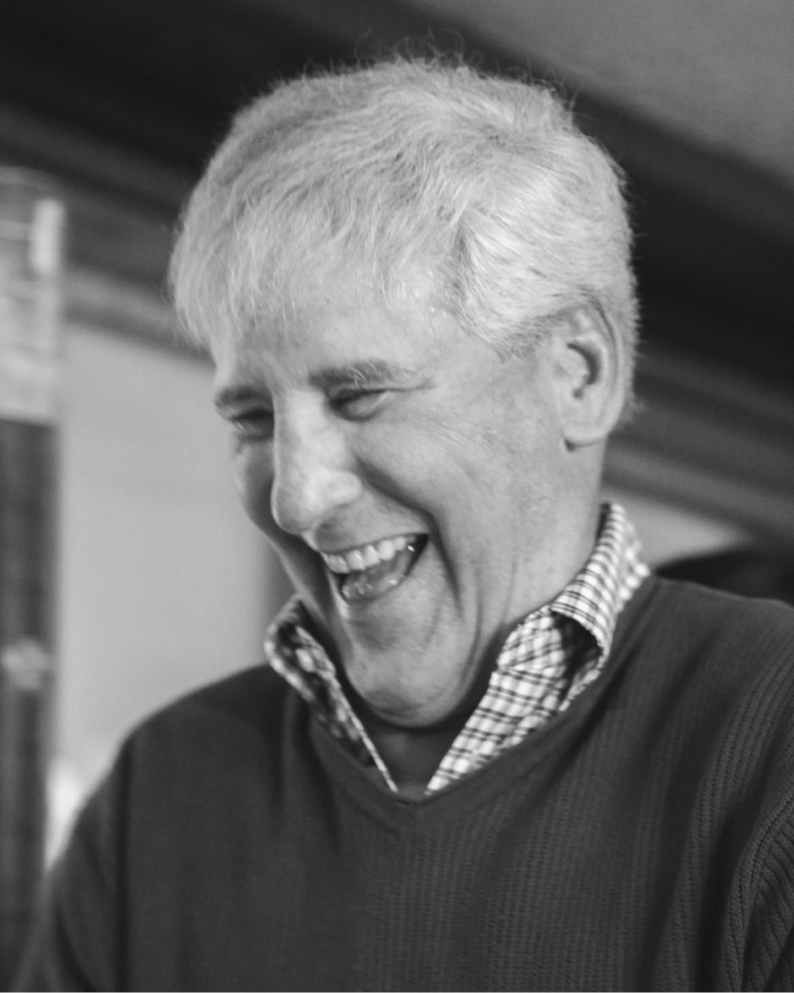
Coach Bill Campbell, 2013.